When WordPress becomes too complicated.
When I first started building websites, I thought more features meant a better website. After spending time with Elementor and some of the bigger WordPress tools, I realised something: sometimes simplicity is exactly what a website needs.
When I first started using WordPress, one of the first tools recommended to me was Elementor. It seemed brilliant at the time. I could build pages visually, move things around and make a website look professional without having to understand every line of code behind it.
And to be fair, it worked. My first website looked good. For a fairly basic website, I was pleased with what I’d created.
But as time went on, I started becoming frustrated. My website felt slower than it should have been, and I was spending more time dealing with the tools used to build it than actually improving the website itself.
That experience changed how I approach WordPress websites today.
When more features become the problem
The big selling point of many premium WordPress themes and page builders is that they can do almost anything.
You can add sliders, pop-ups, animated sections, complicated layouts, visual effects, forms, templates and countless other features. Some of those things are useful, of course.
But here’s the question I eventually started asking myself:
If my website only needs to do a handful of things really well, why am I installing something designed to do absolutely everything?
It’s a bit like buying an enormous Swiss Army knife when all you really need is a screwdriver. The extra tools might sound impressive, but they don’t necessarily make the job any easier.
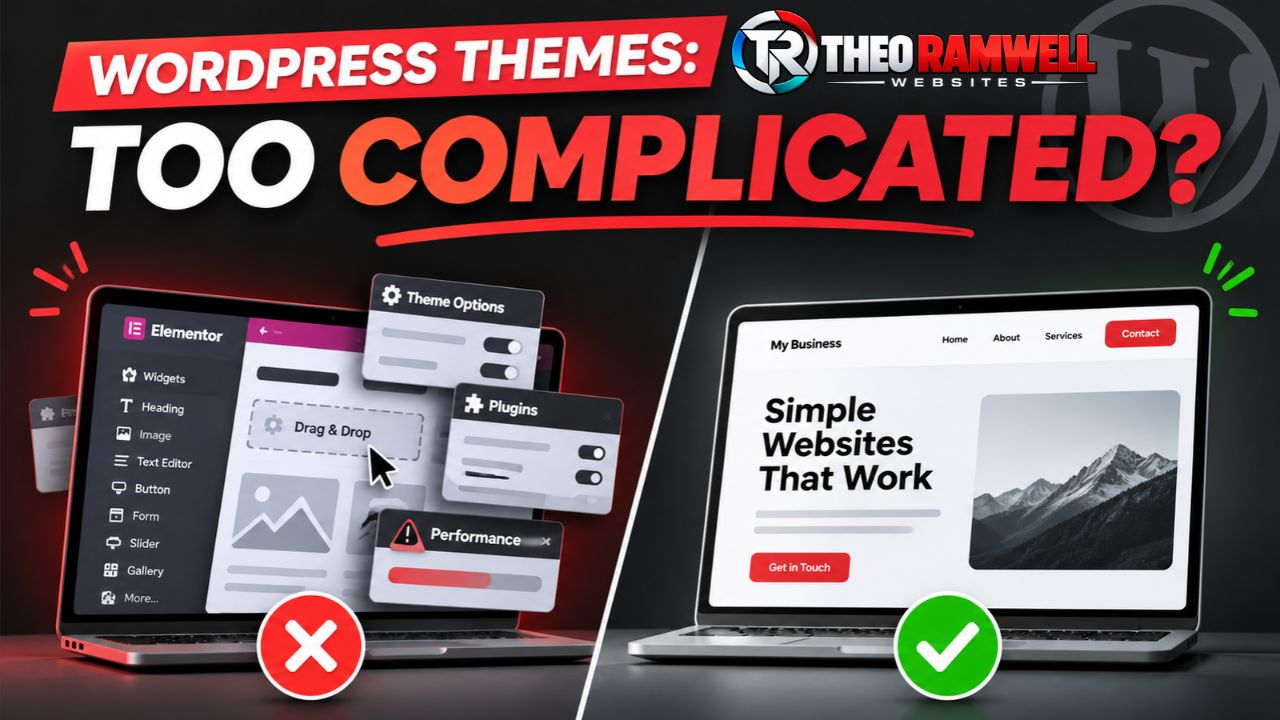
The Everything Website
Dozens of tools, endless settings and features you may never use. Powerful, but potentially harder to manage than your business actually needs.
The Purpose-Built Website
Clear information, strong design, fast-loading pages and a simple route for customers to contact you. Everything has a reason to be there.
My experience with Elementor
I want to be clear about something. Elementor isn’t a WordPress theme. It’s a page builder plugin, and it’s helped plenty of people create websites they might otherwise have struggled to build.
I can understand why it was recommended to me when I was starting out. The visual editing experience made website design feel accessible, and I was able to get something online relatively quickly.
The problems came later.
As my website developed, I became increasingly unhappy with its performance. I eventually realised that the setup I’d chosen was more complicated than it needed to be for what I was actually trying to achieve.
I wasn’t using most of the capabilities available to me. Yet I still had to work within a system designed to support far more than my website required.
My frustration wasn’t that Elementor couldn’t build a good-looking website. It absolutely could.
My frustration was that I’d chosen a more complicated way of building and maintaining a fairly straightforward website. For me, the extra flexibility simply wasn’t worth the trade-offs.
That doesn’t mean every Elementor website is slow. Performance depends on the theme, hosting, images, plugins, design decisions and how a website is configured.
But in my own experience, moving towards a simpler WordPress setup made much more sense.
The hidden cost of a complicated website
When people think about website costs, they usually think about the price of the theme, hosting or the person building it.
But complexity has a cost of its own.
1. Performance can become harder to manage
Feature-rich themes and builders can introduce additional scripts, styles and other resources. Depending on how they’re configured, that can make pages heavier than they need to be.
A well-optimised website using a page builder can still perform well. But adding more layers means there may be more things to optimise, troubleshoot and maintain.
2. Simple changes can feel unnecessarily difficult
If you’re a small business owner, you shouldn’t need to spend an afternoon figuring out how to change a heading, update a service or add a photograph of your latest work.
Yet some website setups can leave you navigating through multiple menus, templates, global settings and editing interfaces just to make a straightforward change.
3. Moving away can be frustrating
This is one of the biggest reasons I’m cautious about becoming too dependent on a particular page builder.
When a website relies heavily on a builder’s templates, widgets and layout system, removing that builder isn’t always as simple as uninstalling a plugin.
You may need to rebuild layouts, replace functionality or clean up parts of the site that no longer display as intended.
That can be particularly discouraging when you’re new to WordPress and just want your website to work.
4. Maintenance becomes another job
Every additional plugin or major dependency is something else that may need updating, checking and occasionally troubleshooting.
Not every plugin is a problem. Many are genuinely useful. The important thing is to be selective rather than adding functionality simply because it’s available.
What does a small business website actually need?
This is where I think website design sometimes loses sight of its purpose.
Let’s imagine you’re a landscaper, electrician, plumber or another local business owner.
Your potential customers probably aren’t visiting your website because they want to admire an elaborate animation.
They want to know whether you can help them, whether you’re trustworthy and how to get in touch.
For most small service businesses, I’d focus on getting these things right:
- Clear services: Explain what you do and who you help.
- Professional design: Make a strong first impression without distracting visitors.
- Real examples: Show photographs, projects, reviews or other evidence of your work.
- Mobile-friendly pages: Make the website easy to use on phones, tablets and computers.
- Good performance: Keep pages efficient and avoid unnecessary loading delays.
- Easy contact options: Help potential customers call, message or enquire without hassle.
- Useful SEO foundations: Give search engines clear information about your business and services.
None of that requires a website to be a singing, dancing robot with a hundred different features.
It requires a website that’s been thoughtfully designed around the needs of the business.
Does that mean you should never use Elementor?
No. I wouldn’t go that far.
There are situations where Elementor or another visual page builder makes sense. For example, a team might already be comfortable with it, or a project may genuinely benefit from its editing capabilities and design tools.
If it’s implemented carefully and performs well, there’s nothing inherently wrong with that.
I just don’t believe it should be the automatic starting point for every WordPress website.
Before choosing a theme or builder, I’d rather ask what the website actually needs to achieve.
Choose the tools around the job. Don’t build the job around the tools.
Why I now prefer simpler WordPress websites
These days, I still use WordPress. I think it’s a fantastic platform, particularly for small businesses that want a professional website they can continue improving over time.
What has changed is how I build with it.
I prefer lightweight themes and a more focused approach to website design. Rather than starting with a huge collection of features and trying to work out which ones I need, I start with the business itself.
What services does it offer? Who are its customers? What information do those customers need? What should they do next?
Once those questions are answered, the design becomes much more purposeful.
Sometimes that means a straightforward five-page website. Sometimes it means something more involved, with additional functionality or an online shop.
The important thing is that every feature earns its place.
A good website doesn’t need to be complicated
Looking back, I’m glad I started with Elementor. It taught me a lot about website layouts, design and what WordPress is capable of.
But it also taught me an equally important lesson: more functionality doesn’t automatically mean a better website.
If you’re building your first website, my advice would be to keep things as simple as you reasonably can.
Focus on the people visiting your site. Make your information easy to find. Give them a reason to trust you. Make it obvious how to contact you.
And don’t feel pressured to install every popular theme, plugin or page builder just because somebody says it’s essential.
Your website doesn’t need to do everything. It just needs to do the right things really well.
Your website shouldn’t be another complicated job on your to-do list.
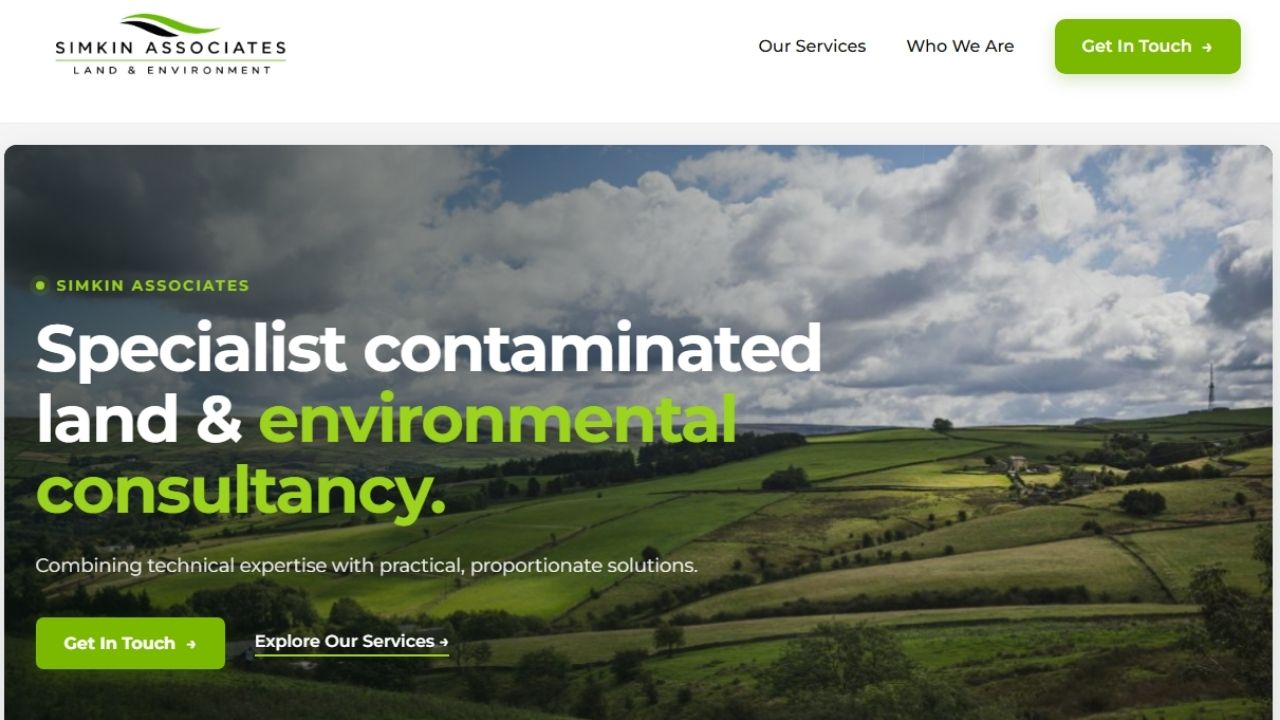
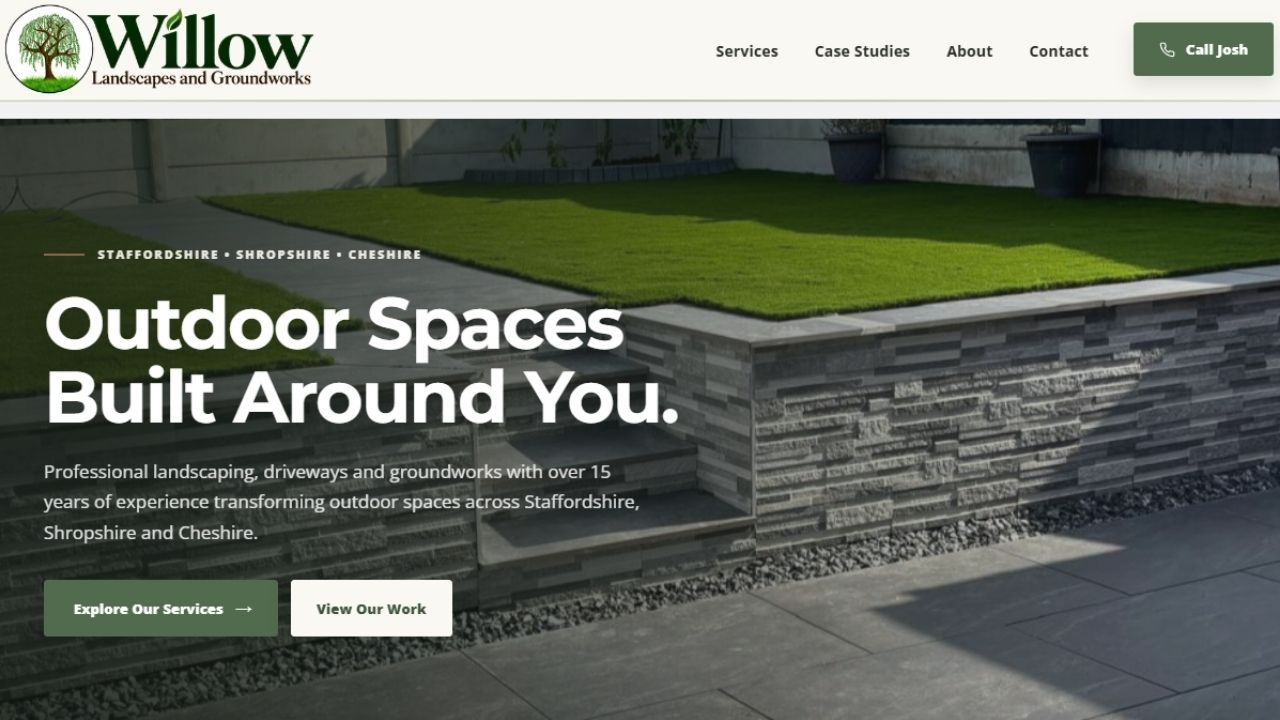
I design professional WordPress websites for small businesses across Staffordshire and Shropshire. No unnecessary complexity, just clear, effective websites designed to showcase your business and help turn visitors into enquiries.